Phased excavation
The pit was developed in working levels aligned with the support sequence and safe equipment movement.

A major urban excavation taken to a depth of 25 metres within a diaphragm-wall support system and eight levels of active anchors.
Moving 570,000 cubic metres in an active urban environment takes more than heavy equipment. It requires continuous control of sequence, haul routes, production and work at depth.
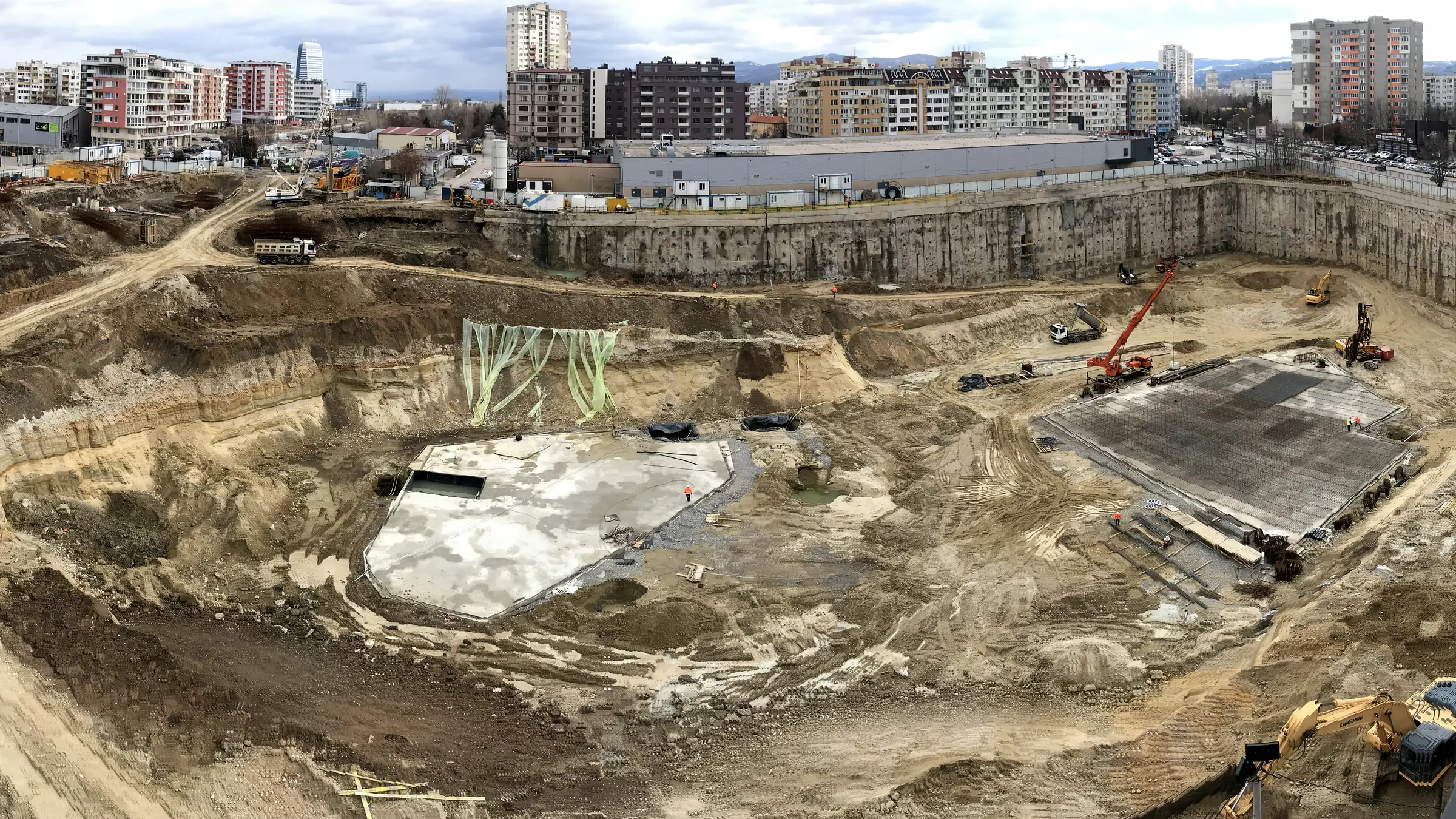
The excavation was developed in stages, coordinated with the diaphragm walls and activation of eight anchor levels. Access, ramps and equipment movements changed with every level.
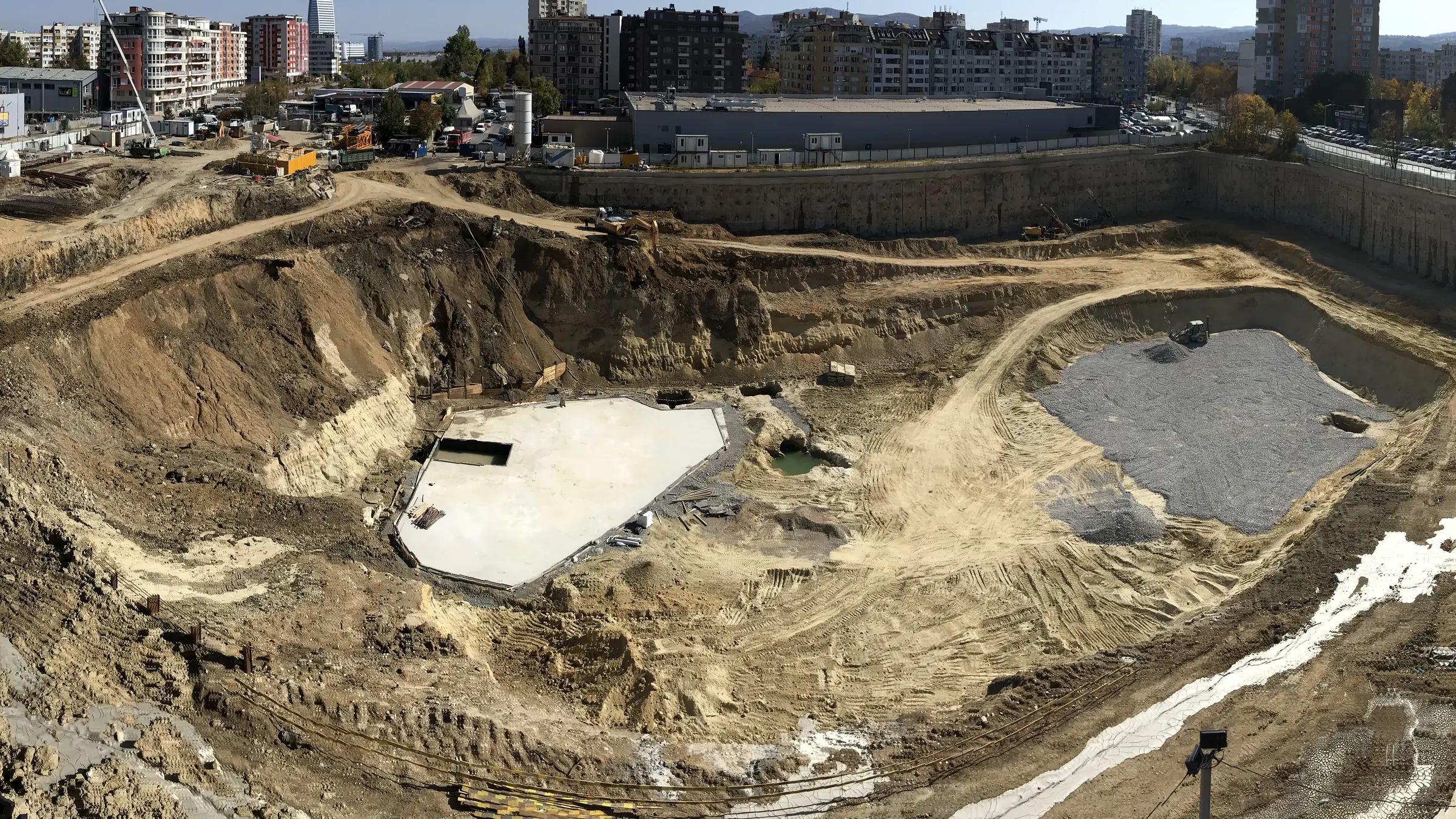
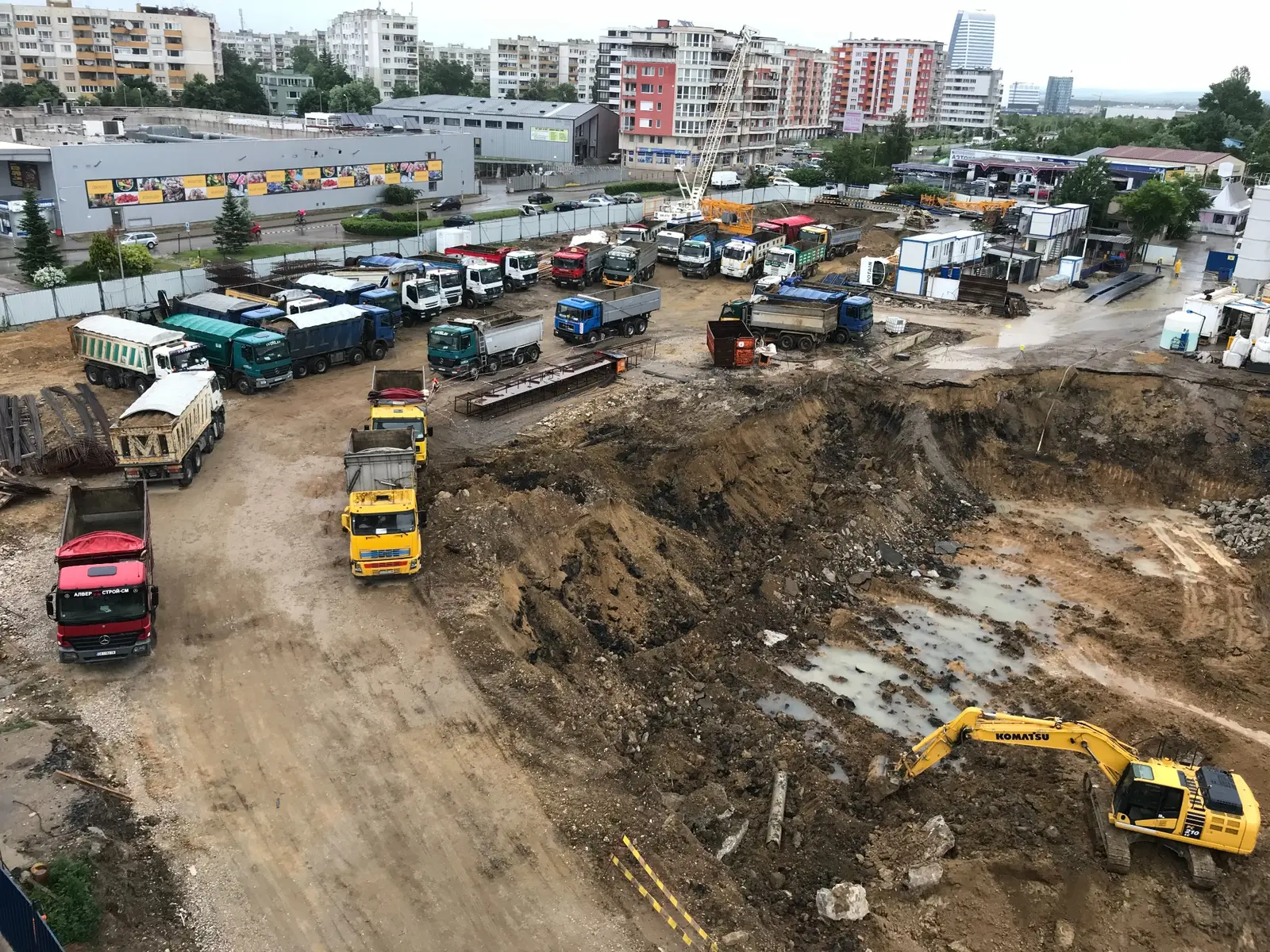
Three views of the same site show the transformation — from the first working level to fully exposed retained walls.
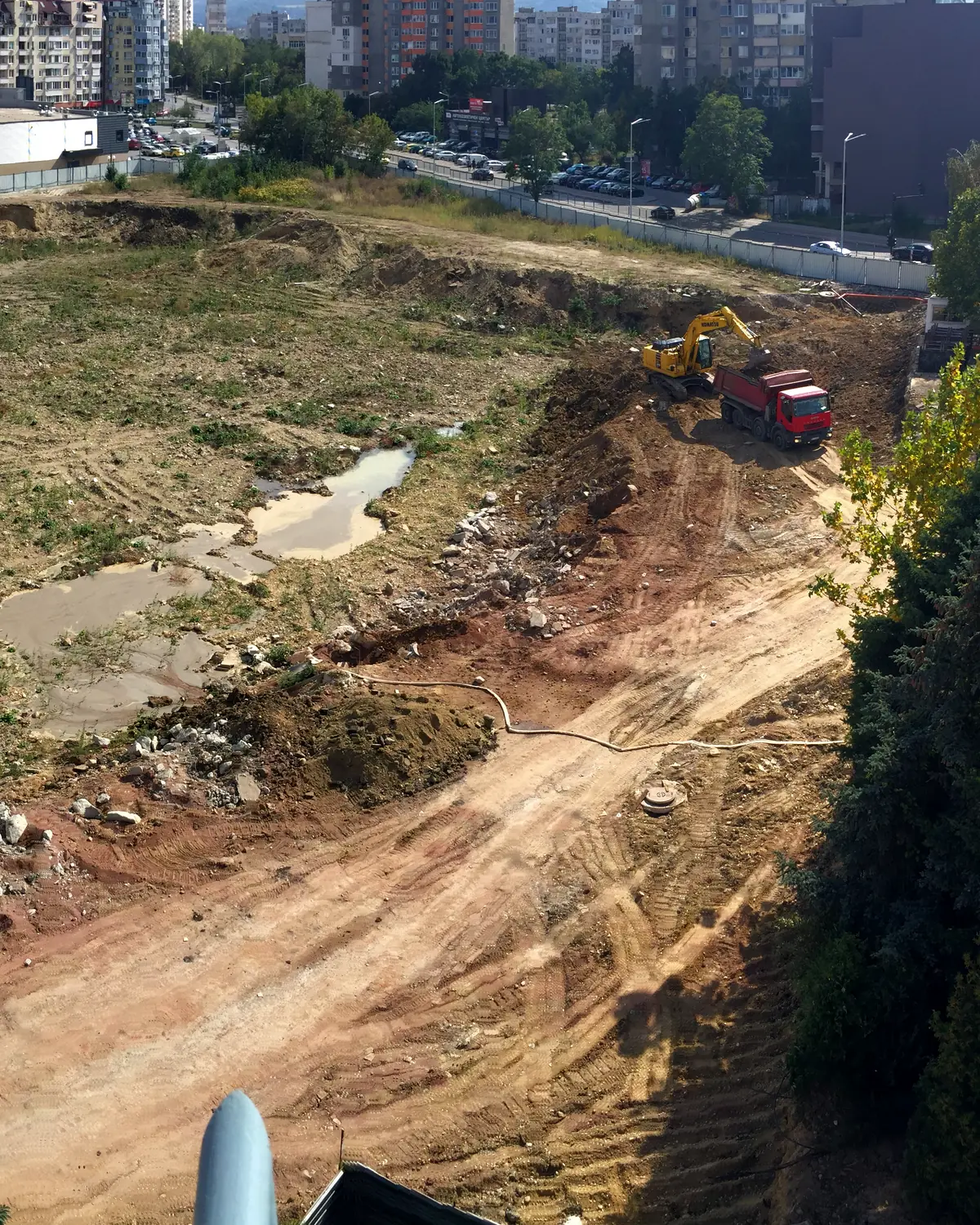
Opening the workface and establishing internal site logistics.
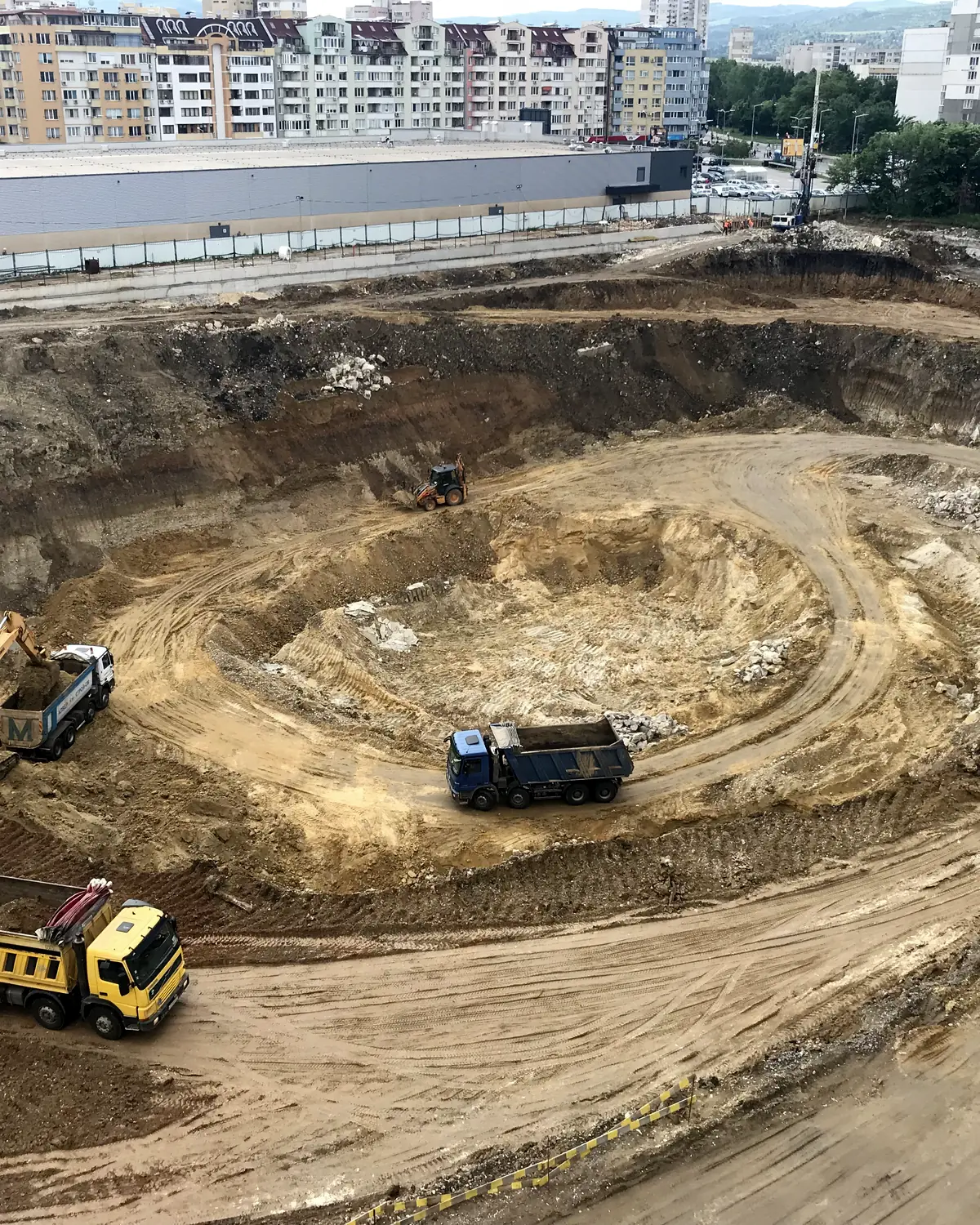
Phased excavation around a spiral haul ramp that kept material moving.
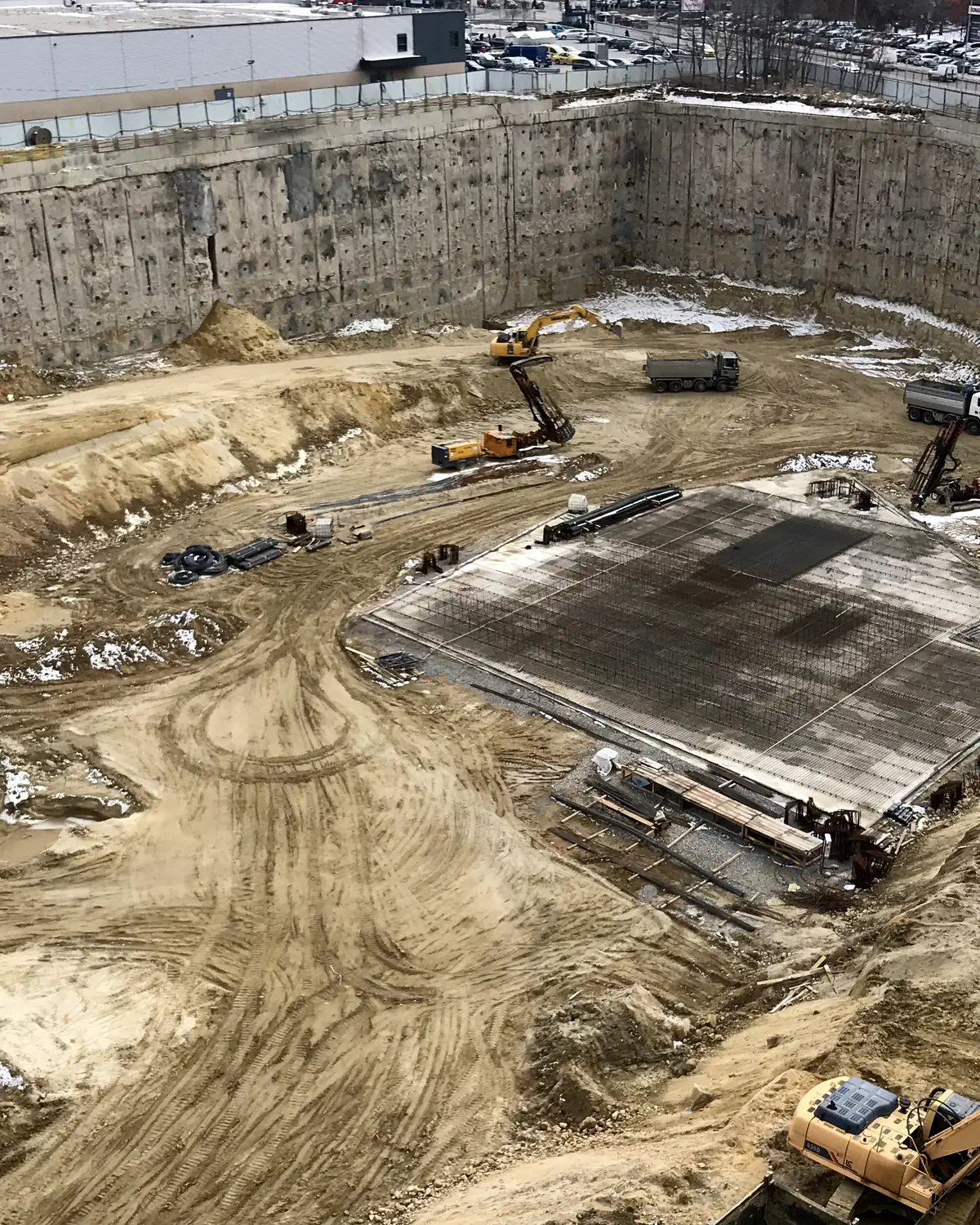
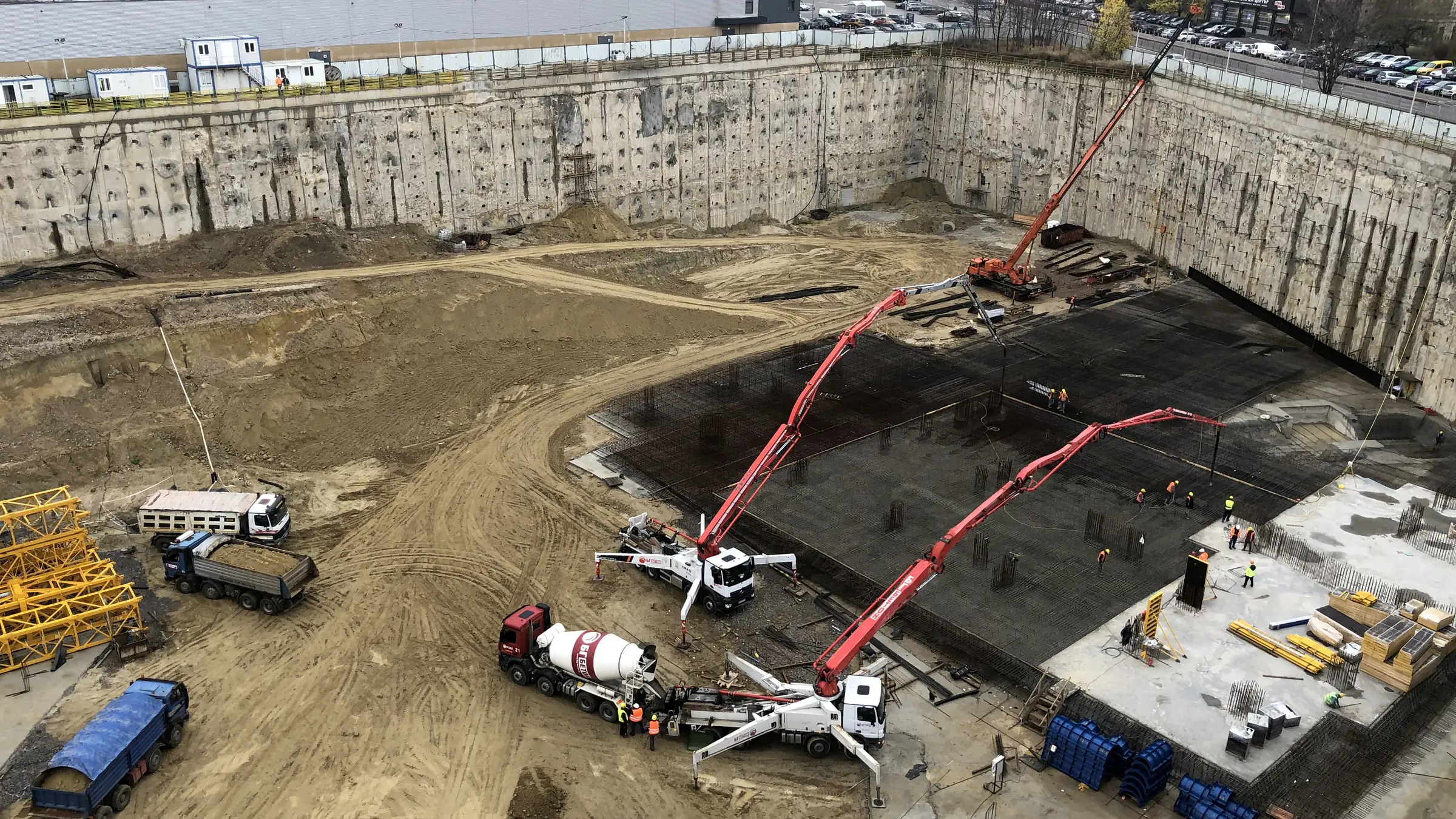
Final level reached and prepared for the following construction package.
Output was maintained through continuous coordination of excavation, loading, haulage, temporary works and groundwater control — keeping the critical workface moving.
The pit was developed in working levels aligned with the support sequence and safe equipment movement.
Internal ramps and loading points moved with the excavation to preserve an uninterrupted production cycle.
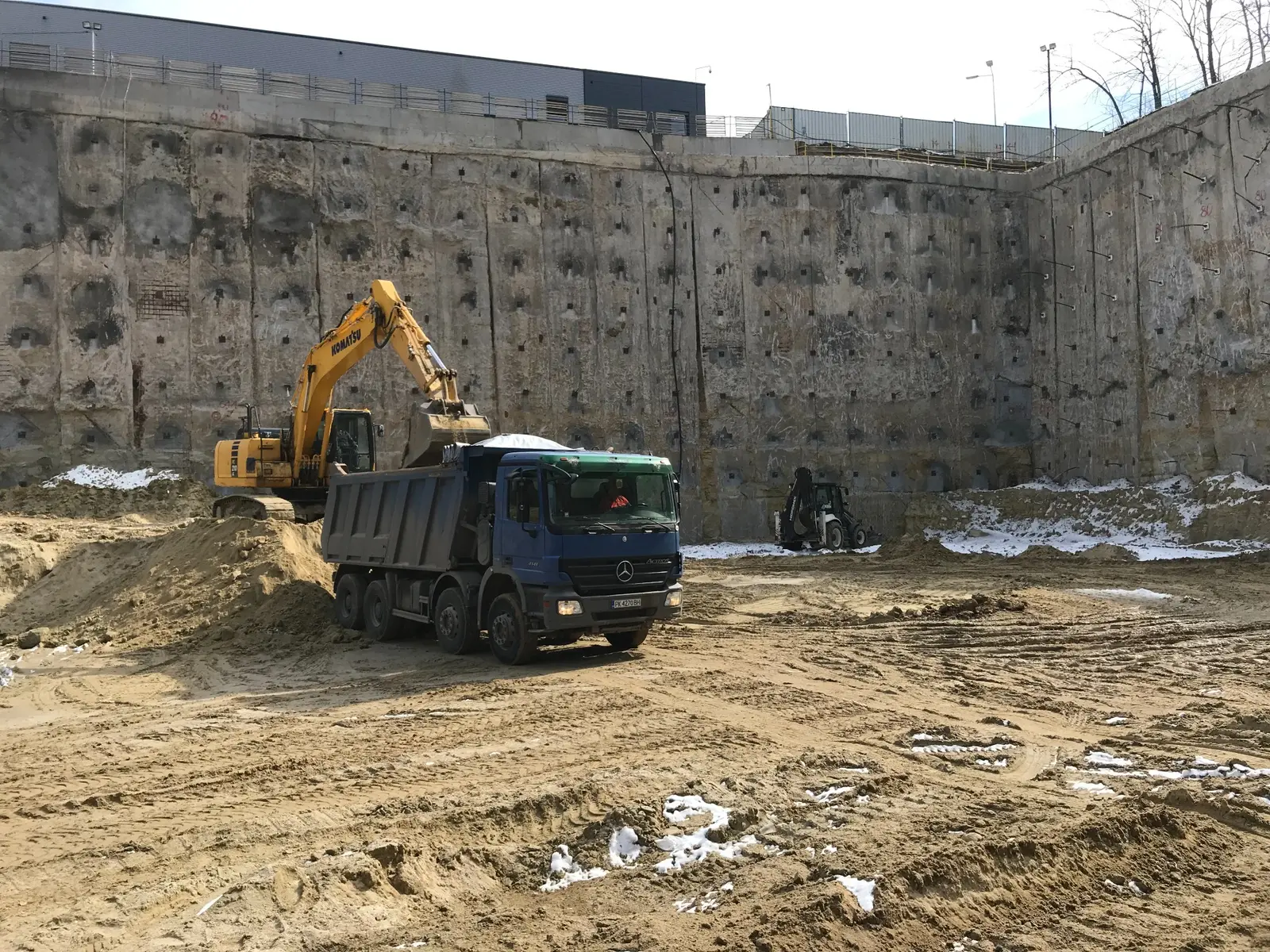
Workfaces were coordinated with the diaphragm-wall system and eight levels of active anchors.
Final trimming and preparation of the completed level for the following structural works.
Between levels −17.50 and −25.00 metres, a drainage system was constructed to collect and discharge groundwater. This kept the lowest working levels accessible to equipment and ready for the following operations.
−17.50 → −25.00 m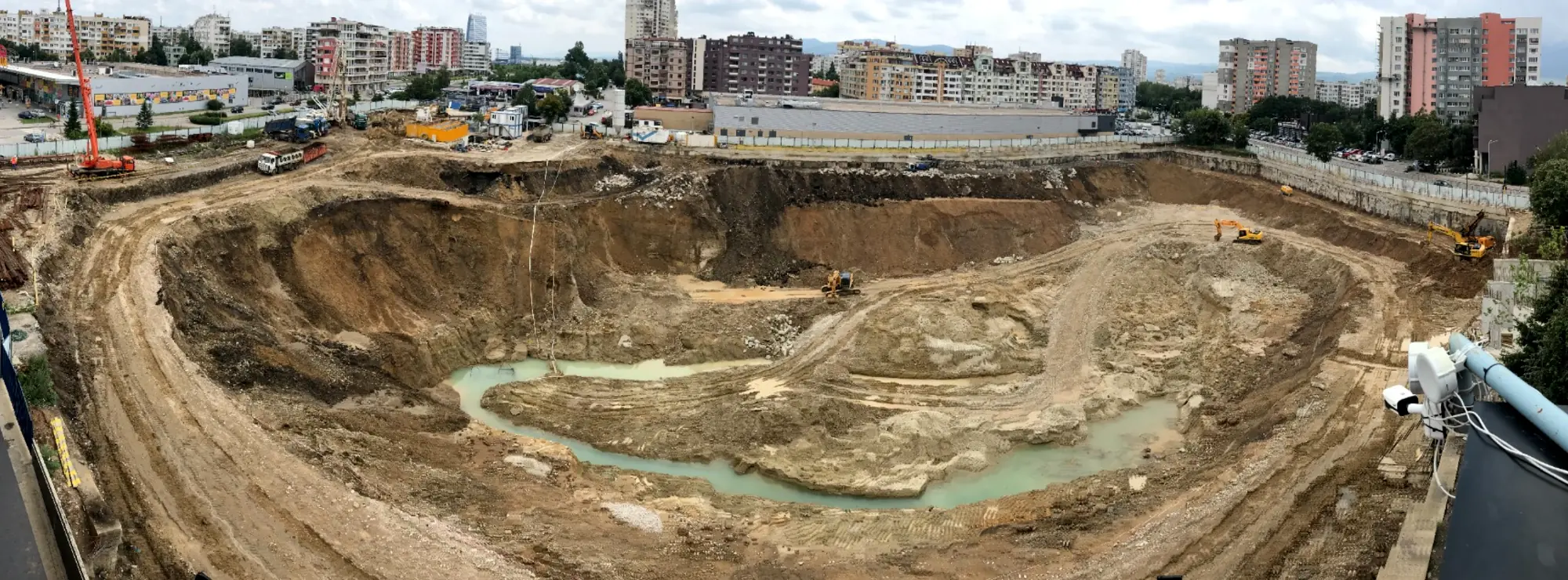
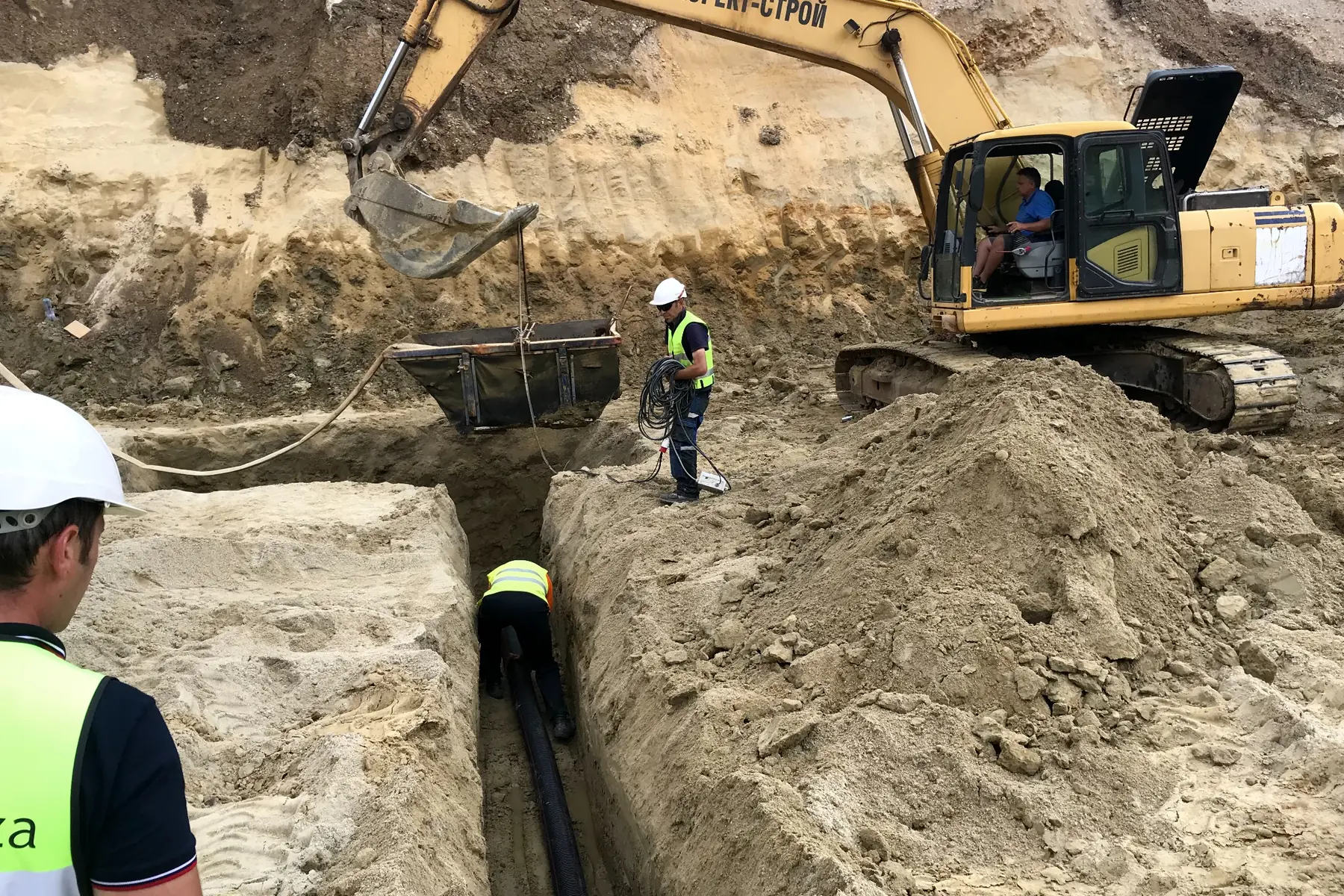
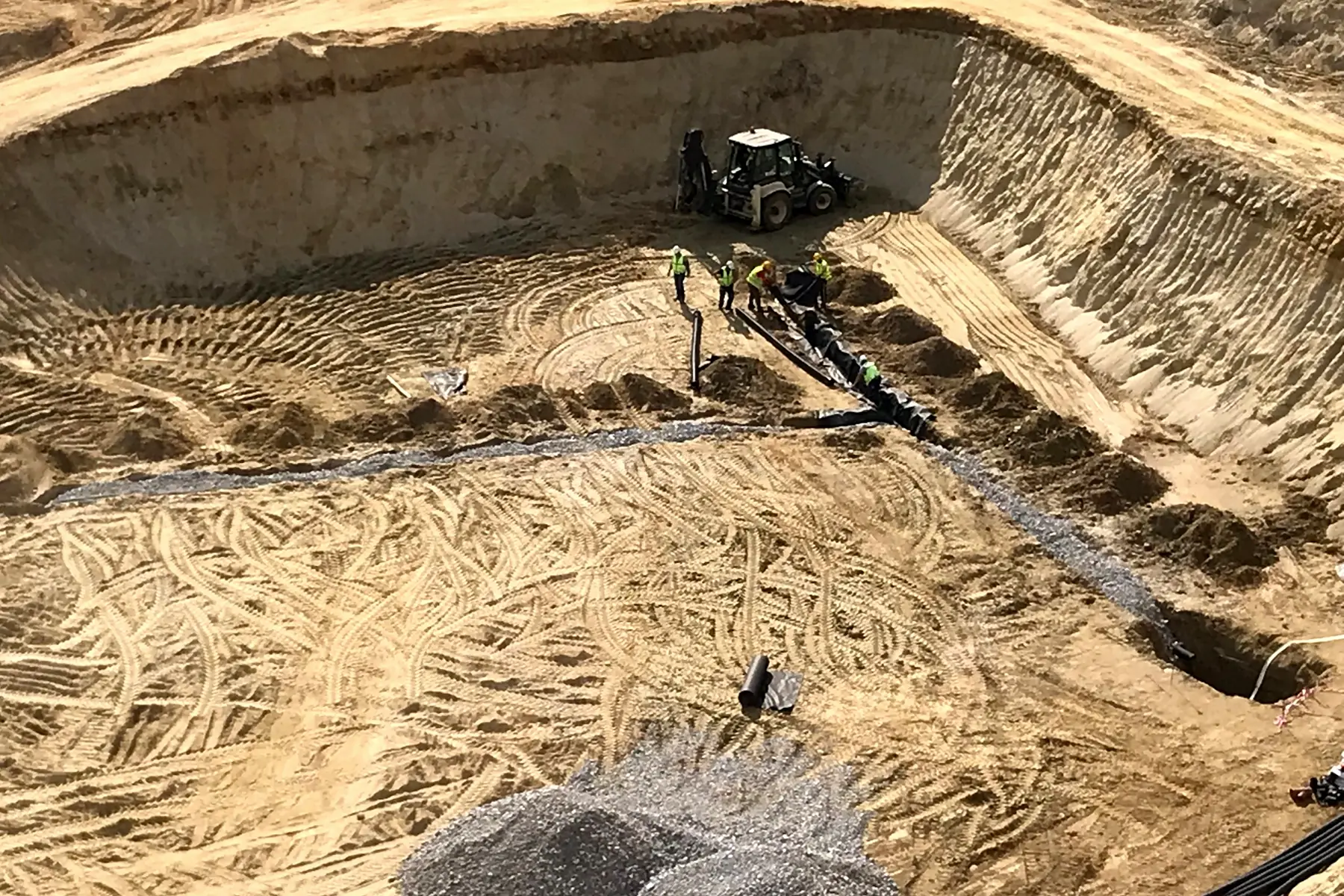
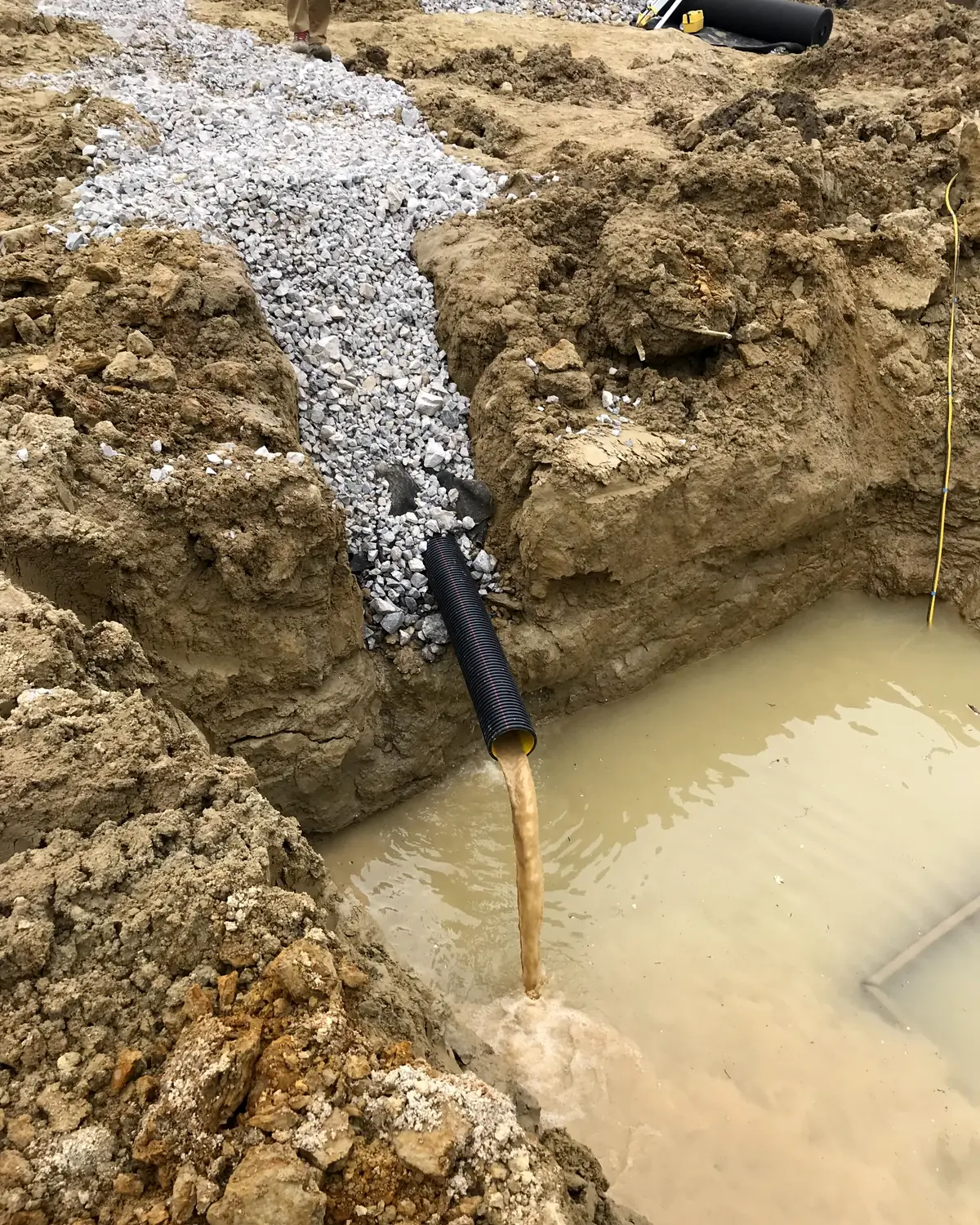
Selected moments from the live site — equipment, loading, retained walls and the completed lower level.
This project brings GRANDE’s core strengths together: high-volume organisation, heavy equipment, deep excavation and control of complex urban ground.
All projects→